Can Plant Biotechnology Save the Disappearing Seagrass?

As underwater seagrass meadows continue to decline worldwide, scientists are seeking new approaches to strengthen restoration efforts. On Nov. 19–20, 2025, researchers from the United States and Europe gathered at the Marine Biological Laboratory to examine whether advances in plant biotechnology could help address long-standing challenges in seagrass conservation.
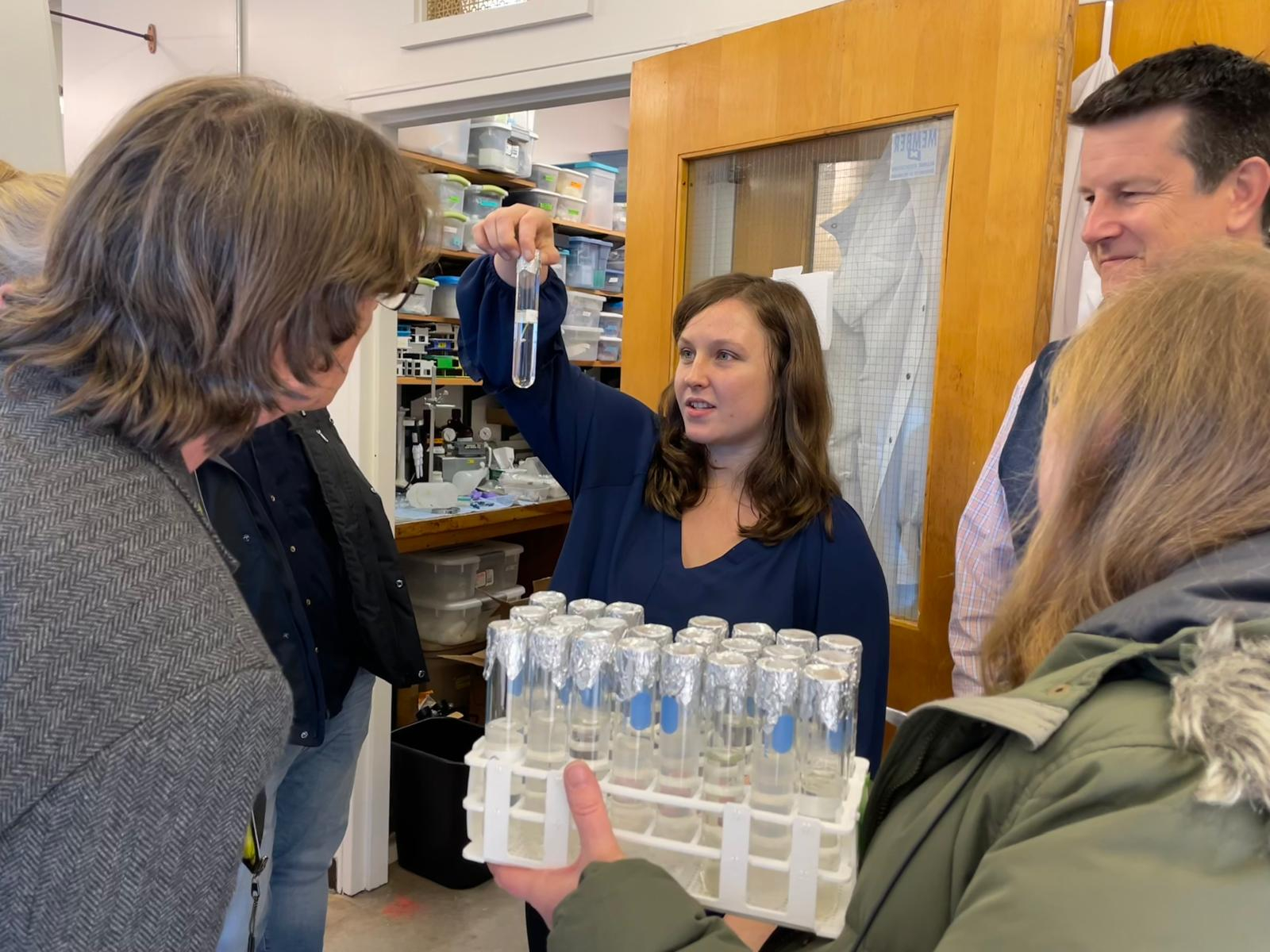
The Seagrass Biotech Workshop brought together two communities that rarely work side by side: seagrass ecologists and conservation biologists, and plant scientists specializing in biotechnology. Organized as part of the SeaGen project, the meeting focused on identifying barriers to restoration success and on exploring whether tools developed for terrestrial plants could be adapted for marine systems.
Seagrasses provide critical ecosystem services. They stabilize shorelines, improve coastal water quality, provide habitat for fish, shellfish, and other commercially important species, and store carbon. Despite their importance, seagrasses are increasingly threatened by nutrient pollution, warming waters, and other human-driven stressors. Restoration efforts are underway in many regions, but progress has been uneven.
Workshop discussions centered on how biotechnological approaches might help overcome these limitations. They considered how tools such as tissue culture, genome editing, and studies of plant development and microbiomes—widely used in agriculture—might inform seagrass research, despite the unique challenges posed by the underwater environment.
“The question is not whether these tools work,” said Mirta Teichberg, an associate scientist at MBL. “It’s how, and whether, they can be transferred to an aquatic environment.”
Participants examined ways to improve propagation and cultivation of seagrasses, reduce dependence on donor meadows—natural, healthy seagrass beds near restoration sites that are often harvested for adult plants used in transplants, a practice that can harm those meadows if overused—and maintain genetic diversity in restored populations.
Rather than seeking immediate solutions, the workshop emphasized collaboration and long-term progress. By bringing together expertise in marine ecology and plant biotechnology, participants aimed to lay the groundwork for future research to strengthen restoration efforts and support the recovery of seagrass ecosystems in a changing environment.
“Seagrass restoration has always required persistence,” Teichberg said. “By bringing in knowledge from outside the traditional seagrass community, we’re hopeful we can overcome some of the challenges that have limited progress and open new paths for conservation.”
Workshop Funded by: Oceankind