Villain to hero: Cape Codders chime in on (now) beloved horseshoe crabs | CAI
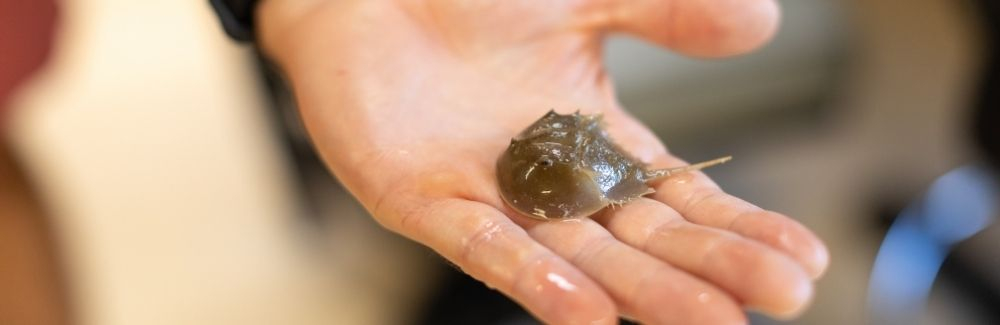
Editor’s note: This piece mentions research by two MBL scientists: H. Keffer Hartline, who won the Nobel Prize in 1967 for work on horseshoe crab eyes, and Fred Bang who discovered that horseshoe crab blood clotted in response to gram negative bacteria, leading to the development of a test for bacterial contaminants that has saved millions of lives.
On Beacon Hill, there’s a bill before the Senate Rules Committee that would designate the Atlantic horseshoe crab as the official marine invertebrate of the Commonwealth. What makes the Atlantic horseshoe crab special to Massachusetts? And why isn't it in the running for state crustacean?
Horseshoe crabs have a complicated history in Massachusetts. They’ve been cast as villains, with a bounty on their heads, and as heroes, saving millions of human lives.
To learn more, I turned to a horseshoe crab expert – science writer Bill Sargent, author of not one but three books about horseshoe crabs. And because a good journalist never relies on just one source, I found another horseshoe crab enthusiast. Eleven-year-old Falmouth resident Jackson Fenstermaker recently attended camp at the Waquoit Bay Summer Science School. Between them, I learned a lot about what makes this oft-misunderstood species so cool.
Read more of the article here.
Source: Villain to hero: Cape Codders chime in on (now) beloved horseshoe crabs | CAI