New Single-Celled Species Discovered at the MBL Gives Insights into How Life Can Adapt to Marine Lifestyles
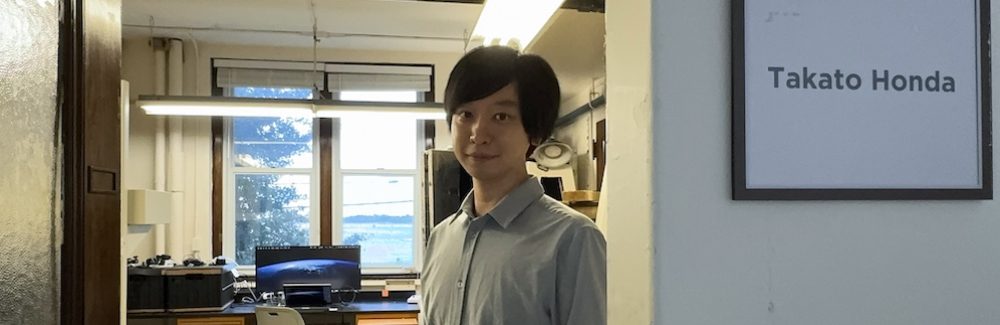
Hidden in water collected from the Marine Biological Laboratory's (MBL) own Waterfront Park, Whitman Fellows Takato Honda, an MIT research scientist, Picower Fellow, and Daniel Cortes, an assistant professor of biology at Virgina Tech have discovered a new species of stentor: Stentor hondawara. Shaped like a funnel, stentors are among the largest single-celled organisms on Earth. Until now, scientists believed these organisms lived only in freshwater, but Stentor hondawara is uniquely adapted to live in seawater. The new species is named after ‘hondawara’, the seaweed group on which it was discovered, also meaning ‘rice in the sea’, a vital habitat for various marine organisms and considered a lucky symbol of good harvest in Japan.
Both Honda and Cortes believe that studying a species that evolved from freshwater to saltwater will deepen our understanding of how organisms adapt to new environments.
“Studying single-celled organisms like stentors will help us better understand the biological principles of how living organisms adapt and how to address changing environments on Earth,” said Honda.
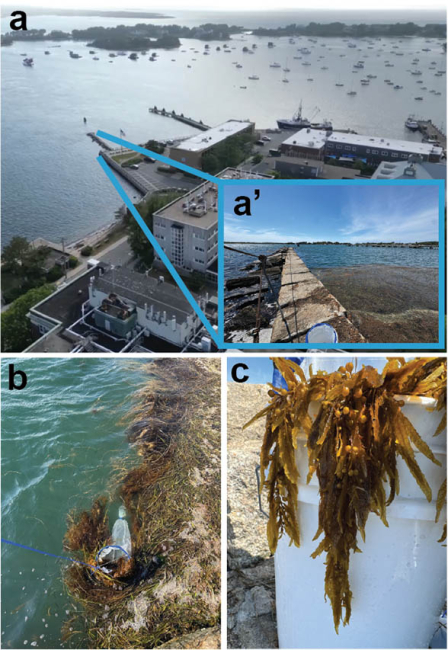
The pair first discovered the new species by chance in 2023, while examining seawater they had collected from Waterfront Park under a microscope. “A few of the creatures in the seawater looked like stentors,” Honda recalled, “which triggered our curiosity, as stentors have been described for over 250 years as generally living in freshwater.”
Although some stentor species have been reported in brackish water—where freshwater and saltwater mix—Honda and Cortes have found the first clear evidence, using modern techniques, of a stentor species that lives in high-salinity seawater.
Wanting to be sure of their findings, Honda brought DNA from the marine stentors back to MIT to run whole-genome sequencing. By comparing its full genetic blueprint with those of the two currently available freshwater Stentor species whose genomes had already been sequenced, they confirmed it was a genetically distinct species. The genome they mapped is among the most complete genome ever assembled for a Stentor species, and it reveals genetic differences that explain how Stentor hondawara adapted to live in seawater.
One of the most important differences is that, unlike freshwater stentor, Stentor hondawara possesses a unique type of aquaporin, a protein that transports water and glycerol, which enables it to thrive in saltwater. The gene groups uniquely enriched in Stentor hondawara also encode a variety of proteins, including ion channels, pH-responsive proteins and osmoprotectants, which are small molecules that cells produce to survive harsh conditions like high salt or extreme temperatures. The genomic analysis also revealed that the new species may also host a unique bacterium inside its cell, an endosymbiont, that produces vitamin B12 and fixes nitrogen for the stentor.
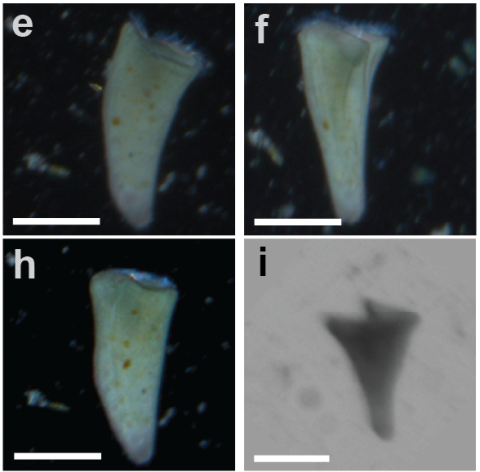
“My lab is specifically interested in researching cellular adaptation,” explains Cortes. “As climates change, adaptable organisms are going to have more advantages than organisms that can't adapt. Ciliates, in general, seem pretty adaptable, and because they're single-celled organisms, there are possibly molecular mechanisms we could learn from them that explain how they are as adaptable as they are.” This summer, the duo are working to culture Stentor hondawara on a large scale to make the new species available to researchers around the globe. “Stentors have been studied for well over 200 years, yet there are few people that really work on them at any given moment,” explains Cortes. They plan to change that with Stentor hondawara, which they hope will become a new model system in the future to help study how single-celled organisms adapt to changing environments.
Their discovery may be only the beginning. “We believe this is the tip of the iceberg,” Honda said. “We are still actively collecting marine samples, and it would be wonderful if researchers identified new marine stentor species in the future from different locations."
For Honda, the discovery carries both scientific and personal significance. He appreciates the long tradition of scientists who have advanced knowledge through careful observations with their drawings. “I stand on the shoulders of giants who drew scientific sketches to deepen their understanding of what they were observing. I believe it is one of the foundations of science. I respect and follow this tradition and drew the scientific sketch of the new species,” Honda says.
That connection feels especially meaningful because Honda has been conducting his research in the same MBL laboratory once used by one of his childhood heroes, Nobel laureate Osamu Shimomura. Osamu Shimomura and Honda are from the same hometown in Japan - Nagasaki Prefecture. “I still remember when he received the Nobel Prize for his work on green fluorescent protein, and he came back to Nagasaki City to give a lecture for young students, and the most important lesson I learned from him was to keep following one’s own curiosity. The applications of work may be done by someone else in the future. He emphasized that if you have questions and curiosity, just follow your passion to better understand phenomena,” Honda said.
“I'm grateful for the serendipity of being unexpectedly assigned to the lab he worked out of,” Honda said. “I acknowledge his presence (force) in the room. My lab has been running various curiosity-driven exploratory projects ongoing. From the window, I also see the statue of Rachel Carson reminding me of the sense of wonder. The MBL connects scientists across global borders, and across disciplines and timelines of science.”
Funding: This work was supported by the Grass Fellowship funded by the Grass Foundation, the Kavli-Grass-MBL Fellowship funded by the Kavli Foundation, and the MIT Picower Fellowship funded by the MIT Picower Institute and the Freedom Together Foundation.