Alumni Spotlight: Hortense Gerardo
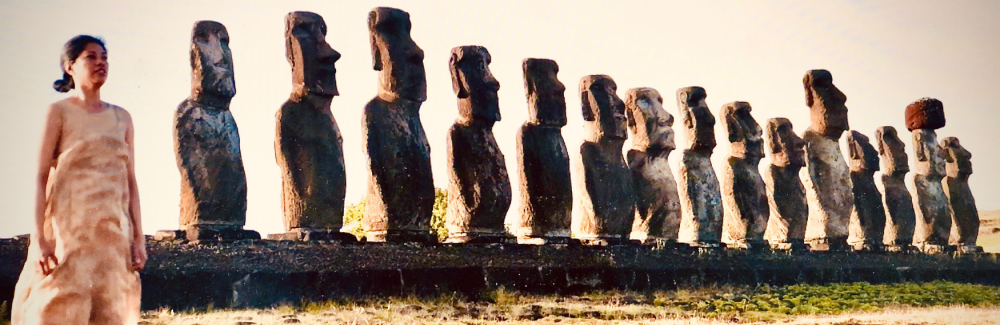
Hortense Gerardo has spent her career crossing boundaries that most people spend a lifetime trying to define.
A physician by training, she has moved from neuroscience to anthropology, screenwriting, and public art. Her projects have ranged from teaching Australian children how to administer first aid for blue bottle jellyfish stings, to collaborating on a project to create an installation exploring how AI depicts itself. Today as the director of the Anthropology, Performance, and Technology (APT) Program at the University of California, San Diego, Gerardo works at the intersection of science, art, and technology. But the winding path that brought her there has one important inflection point: The Marine Biological Laboratory.
Gerardo finished her medical degree at the University of Santo Tomas in the Philippines, where both her parents and her brother graduated. Although she was deeply interested in neurology, she had always loved to write, so she accepted a project at Hanna Barbera in Sidney, Australia, that required her to write medically-informed scripts for short videos to teach young kids how to respond to emergencies. Working in Sydney was Gerardo’s first experience writing screenplays and taking dance lessons, and the beginning of two lifelong passions.
Gerardo first came to the MBL in 1988, spending a year as a visiting researcher with the late professor Jelle Atema. It was then that the MBL’s collaborative, multidisciplinary environment began to shape the way she thought about science. She taught herself biophysics and developed a recording chamber that allowed her to undertake patch clamp recordings of live neuronal cells, a technique that eventually led to a research fellow appointment at Yale University.
“One of the things that struck me about the MBL was this pursuit of research questions that did not necessarily have an immediate connection to medicine or humans,” said Gerardo “The kind of research that goes on at the MBL is very, very useful, even if in the short term, people outside the field don't quite realize it. But I think being around scientists at the MBL taught me about the joy of pure research, which may not necessarily have an immediate practical goal.”
Being part of that environment, she says, taught her something that would continue to influence her long after she left Woods Hole: the value, and joy, of pursuing knowledge simply because a question is worth asking.
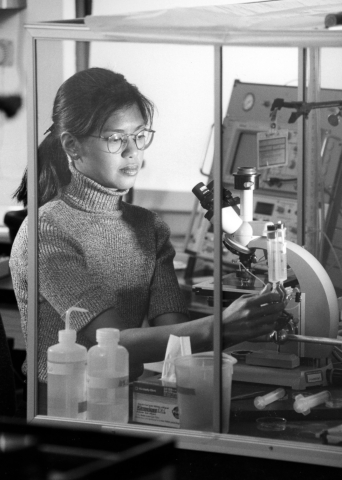
After two years as a post doctorate in the Department of Neuroscience at the Yale School of Medicine in the laboratory of the late Gordon Shepherd, she returned to the MBL, this time as a research fellow in the laboratory of Vince Dionne. But even as her scientific career continued to develop, another path was beginning to emerge.
During the cold winter months in Woods Hole, Gerardo began taking drum lessons with Rick Bausman at the Old Fire Station in Woods Hole and continued her dance training with the late Klara Koenig in the Community Hall next door. These combined skills led to a neuroanthropology study of drum communication as a graduate student with Terrence Deacon at Boston University and eventually a dual doctorate degree in Anthropology and the Performing Arts from the University Professors’ Program at BU, a multidisciplinary program that felt like a continuation of her time at the MBL: an environment where crossing disciplinary boundaries was encouraged.
This shift may have seemed dramatic to some, but for Gerardo, it was always a matter of curiosity, and a desire to explore questions from more than one perspective.
She then joined the faculty at Lasell University, with a joint appointment in Social Sciences teaching Anthropology courses, and the Humanities teaching courses in the Performing Arts. Thirteen years in academia lead her in yet another direction—one that would take her directly to the communities around her.
She applied to be the Artist-in-Residence at the Metropolitan Area Planning Council, an urban planning agency that addresses the needs of the 101 municipalities in the Greater Boston area.
The experience changed the way she thought about the relationship between art, research, and the communities they could serve.
“It was during that time I realized that though I loved my work in academia, I was really excited by this notion that the work that I was doing, artist-based but informed by social engagement and community needs, could affect social change,” she explained.
The role also offered her a way to bring together the different threads of her career.
Soon, she would put that approach to the test in Medfield, Massachusetts, where a deeply divided community was struggling to decide the future of a former hospital for the criminally insane.
As artist-in-residence, Gerardo was asked to help the community find a way forward.
“Half the town wanted to destroy it, half the town wanted to revitalize it, but in the meantime, it had fallen into disrepair, there was vandalism, and it was costing the town more than they had anticipated,” she recalls. She began her task the way an anthropologist does: by listening. As she interviewed Medfield residents, Gerardo discovered that many people saw the property as more than just the site of its difficult past.
Using what she learned, she created a site-specific theater piece that brought those perspectives together and invited the community to see the property in a new way.
The town did not suddenly agree. But something had changed.
Before the project, perhaps 30 people might attend a town meeting. After the performance, about 1,000 people came together to help decide the future of the property.
“I’m really proud and honored to say that the former chapel and infirmary is now the Bellforge Arts Center,” Gerardo says.
Following her stint as artist-in-residence, Gerardo became the Director of the Anthropology, Performance, and Technology (APT) Program at the University of California, San Diego, a role that finally brought together many of the things she had been exploring throughout her career.
“Multidisciplinarity is the wave of the future,” she explains, “and the key is being able to integrate disciplines in a way that's contextually relevant and ethical and meaningful for people, and in that regard, just having a lot of disciplines under your belt isn't enough. It needs to be informed by a kind of humanity, and you get that from being around other people in a community like Woods Hole.” That ability to move between disciplines has become especially relevant in Gerardo’s recent work, as technology raises questions that once belonged primarily to anthropology and neuroscience.
“In anthropology, one of the big concerns had always been about what makes us essentially human,” Gerardo explains. “What defines us as humans?” Traditionally, those questions were explored through our evolutionary relationships with other species—what separates us from other apes, and what we share with them.
Today, Gerardo sees another comparison emerging: humans and machines.
“Recently there has been a very urgent interest in finding out what makes us essentially human in relationship to machine learning and AI,” she says. “It is in this area that my work as an anthropologist seems to have really taken off, exploring human | machine learning interaction, which is anthropological in nature, and also uses my background in neuroscience.” Despite (or perhaps because of) the high demand for her multi-disciplinary work as an artist and scientist,
Gerardo continues to return to Woods Hole every summer and is an active member of the MBL council.
For Gerardo, the pull of the MBL is about more than professional connection. It is the people and the culture of curiosity they create.
“The MBL is such a magnet. It's a joy to be surrounded by people who are ever curious, heavily informed, and passionate about their work,” she explains. “I've really learned a lot from being in the MBL community and I feel very fortunate.”
“You can't help but return once you touch that magic, it's hard to be without it,” she adds.
“Despite traveling all over the world, I always feel like Woods Hole is home. It's a spiritual home, and so much of what renews me each year is addressed when I'm visiting for the summer, because that's where I have generated a lot of my original work, whether it's in playwriting or screenwriting in the arts, or in going deeper into my research investigations. I find just being in that environment really helps me open up to nature and the world. I recharge here,” she says.
For someone whose career has been defined by crossing boundaries, perhaps that is what keeps bringing Gerardo back to the MBL: it is a place where curiosity has room to wander, disciplines have room to overlap, and a question does not have to fit neatly into a single field.
“The MBL community has been so wonderfully supportive all these years. I hope people continue to support the MBL, believe in its mission, and recognize that the work done at the MBL is deeply important, especially in the future as we face the climate crisis. The work that we do, that is done there, is so vital and important.”